MAINE CHEESE GUILD – 2/28/05 Notes (not minutes)
Attendees – Cathe Morrill, Marjorie Lupien, Gary Anderson, Jean Koons, Jim Bartlett, Diane Schivera, Glendon Mehuren, Eric Rector, Mary Burke, David Peterson, Jennifer Bettancourt, Anne Tripp, Heidi Klingelhoffer, Beth Whitman, Jane Marasco, Scott Gardner, Cathleen Cotton, Linda Stahlnaker, Shelly Doak, Bob Spear, Beth McEvoy (in no order of importance)
First order of business:
Lab – Cathleen Cotton & Linda Stahlnaker from the Department of Agriculture Division of Animal & Health Industry reviewed the lab procedures that they have in place and those that will hopefully be on line soon. Items of note: current tests include coliform and spc and are done routinely. They do butterfat for cow and hope to have goat on line in 2 –4 months. Protein tests are done for cow’s milk. There is no plan in site for butterfat for sheep. Linda and Cathy are certified for somatic cell on cow – goats in the future. They will take tank milk samples and run antibiotic, SPC and coliform. Rules are that if 2 out of 4 samples exceed 10 colonies, the producer receives a warning. Within 3 – 21 days, another sample is collected by the inspector and a warning is issued. If the sample causes a 3 out of 5 positive for more than 10 colonies, the production is halted until the problem is identified and corrected to the satisfaction of the Dept of Ag.
Beth McEvoy, DVM - Maine Health Care Assurance Program - Outlined program for cow & goat testing for diseases – up to 2 hours for farm’s vet visit paid by program. For more information – mechap – 343-0344 – mceruk@kynd.net
Shelly – LD 654 Discussion about a new bill to be introduced with hearing on 3/7. Cheese Guild will create a response to the bill as a concerted group and Cathe will present at hearing on 3/7. Each cheese producer is asked to make comment to the Committee and their Legislators along with the Cheese Guild response. Shelly will e-mail the testimony that Don Hoenig will present at the hearing. Cathe will find info about final version from the Dept. of Ag. that will be presented on Monday. Cathe & Beth will work on a statement, Heidi and Diane will critique and all members will be e-mailed the testimony that will be presented on Monday.
Shelly also informed the Guild that Glendon Meheuren’s position has been eliminated through the latest recommendation to the legislature. It still is worthwhile for us as the Guild and Cheesemakers individually to express their opinions about this budget cut before the final budget is signed. Legislative Contact info: www.maine.gov – click on legislature Representatives – 2 State House Station, Augusta, 04332-0002 - 1-800-432-2900 Senators – 3 State House Station – Augusta, 04332-0003 1-800-423-6900
Bob Spear – Comminssioner of Department of Agriculture discussed the elimination of Glendon’s position and plans that will be fleshed out to continue to satisfy farm inspections and producer inspections.
Business Meeting- The election of Officers was unanimous as follows: Caitlin Hunter – President Cathe Morrill – Vice President Scott Gardnerb- Treasure Jennifer Bettancourt – Secretary All terms for one more year.
Other Business – Margaret Morris workshop has 9 signed up attendeees. Need to determine if we can pro-rate cost for individuals that are unable to attend both days. Kerri Sands – Nezinscot Guild – 3/13 Spanish cheesemaker -Kerri Sands & Josep Cuixart at Nezinscot Farm on 3/13 – Glen will get phone # & e-mail for Kerri to ensure anyone that is interested can attend (Cathe to follow up)
Cheese/Wine Festival - Need farms to commit to Farm tours as part of Cheese/Wine Festival in Oct. (Farms to-date – Appleton Creamery and Mystique. Producer – State of Maine Cheese Co.) Camden Rockport Lincolnville Chamber Food & Wine Festival – Cathe will update the Guild The date is 5/21/03 – 1-4 pm at State of Maine Cheese Ag Day – 3/22/05 – Hall of Flags – Cathe will be at the fabulous Cheese Guild booth – any and all that can and want to help out would be welcome please let Cathe know – 8 am – 2 pm are the approximate times of set up and departure.
As mentioned, these are notes, not official minutes except for the election of officers.
Respectfully submitted, Cathe Morrill
Tesitmony of Cathe Morrill on behalf of THE MAINE CHEESE GUILD
The Maine Cheese Guild strongly opposes LD 654 “To Require the Department of Agriculture, Food and Rural Resources Accurately Identify Harmful and Nonharmful Bacteria When Testing Food Products.”
At first glance, this legislation appears as though it would strengthen the regulation to make it safer for the consumer and protect the processor/producer. The Maine Cheese Guild, however, feels that this proposal would in fact weaken the regulation and perhaps even lead to contamination issues that would damage the reputation that Maine currently has with regard to the production of clean milk and milk products.
The legislation would change the methods of testing from an “indicator standard” to a “specific standard”. The current “indicator standard” is able to accurately identify operations that could allow levels of bacteria in excess of the current strict standard. It then allows the processor/producer to rectify problems BEFORE they become a health risk. When levels of bacteria are in excess of the current standards, fail safe mechanisms are in place to allow the processor/producer to identify any sanitation issues that caused the elevated results. Upon identification, the processor/producer will rectify any issues and continue to maintain a high safety standard.
The “specific standard” would weaken our current laws, because the Department of Agriculture would no longer be gauging the overall cleanliness of the operation, but would be forced to spend valuable resources identifying each individual bacteria from any and all samples, whether the bacteria is harmful or not. The vast majority of bacteria identified through the current testing is deemed not to be harmful to humans. The proposed standard would be the equivalent of a costly search for a needle in a haystack.
As Maine dairy operators, we can not afford to have the reputation of the quality of our milk and milk products suffer. We, as business owners and taxpayers of the state of Maine, can not afford to spend limited financial resources on a program that will only weaken the current strict standards of dairy cleanliness.
The Maine Cheese Guild has blossomed over the last several years. We are a non-profit organization that has infused vitality to the dairy industry in Maine. Collectively and individually, we have recognized the demand for a wide variety of artisanal cheeses and have been able to create a respect and market for our cheeses. The diversity of products is large and growing. The ability to meet demand for artisanal cheeses also allows us to promote buying local. Our products meet the ongoing desire for products that adhere to “back to basics” ideals. Our members have consistently met the current rigorous standards. The Department of Agriculture program gives us confidence that we meet these standards and can boast that we do so in our marketing endeavors. Lastly, for this all encompassing criteria to be mandated would be costly and time consuming and possibly prevent excellent processors/producers to do what they do best – make high quality and safe products that consumers want.
In short, the current program has worked very effectively for years. It reminds us of the age old saying “if ain’t broken, don’t fix it.”
CURRENT MAINE CHEESE GUILD MEMBERS Milk or Sheep Products (Type of milk for milk or milk products listed)
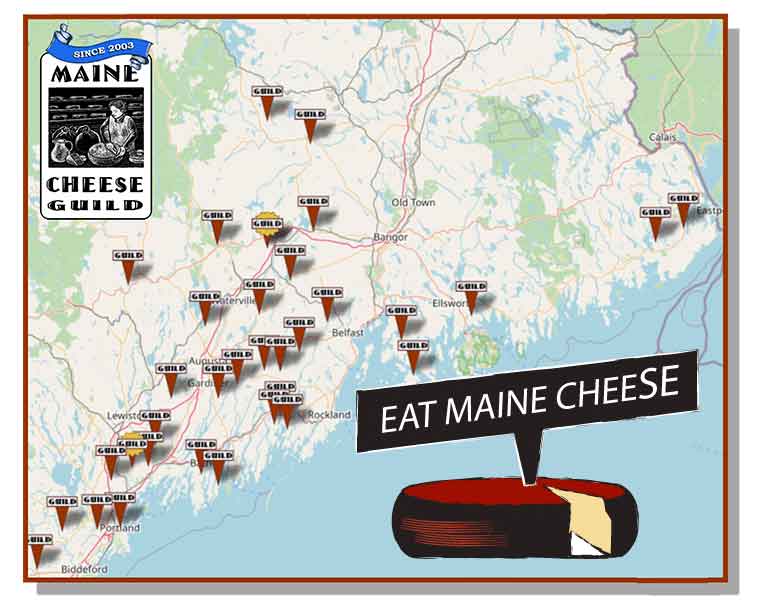
1797 Farm - Scott Gardner, 337 Fickett Road, Auburn, ME 04210 – sheep milk Appleton Creamery – Caitlin Hunter, 780 Gurney Town Road, Appleton, ME 04862 – goat milk Ells Farm – Perry Ells, 1244 Clary Hill Road, Union, ME 04862 – sheep milk Hahn’s End – Debbie & Drew Hahn, 62 Captain Perry Drive, Phippsburg, ME 04562 – cow milk Harmony Farms Creamery – Wanda Thomas, 253 Athen Road, Harmony, ME 04942 - cow milk Hart-to-Hart Farm – Linda Hartkopf, 16 Duck Pond Lane, Albion, ME 04910 – cow milk Liberty Farm – Anne & Joel Tripp, 238 Flag Pond Road, Saco, ME 04967 – goat milk Monroe Cheese Studio – Eric Rector, 554 Dickey Hill Road, Monroe, ME 04951 – cow Mystique Cheese – Marjorie Lupien, 288 Friendship Street, Waldoboro, ME 04572 - goat milk Seal Cove Farm – Barbara Brooks, 202 Partridge Cove Road, Lamoine, ME 04605 – goat milk Silvery Moon Creamery at Smiling Hill Farm – Jennifer Bettancourt, 781 County Road, Westbrook, ME 04092 – cow milk State of Maine Cheese Co. – Cathe Morrill, 461 Commercial Street, Rockport, ME 04856 – cow milk Sunset Acres – Anne Bossi & Bob Bowen, 769 Bagaduce Road, Brooksville, ME 04617 -goat milk Tramps Rest – Charles Hopkins, 236 Center Road, Monroe, ME 04951 – goat & sheep milk Udder View Farm – John & Christine Alexander, 256 Sacarap Road, Columbia, ME 04623 – goat milk Willie’s Alpine Dairy – Willie Higgins, Ella Gerald Road, Canaan, ME 04924 – goat & cow milk York Hill Farm – John & Penny Duncan, 257 York Hill Road, New Sharon, ME 04955 - goat milk
Testimony of Dr. Don Hoenig, State Veterinarian Division of Animal Health & Industry Department of Agriculture, Food & Rural Resources
In Opposition to LD 654 An Act to Require the Department of Agriculture, Food and Rural Resources Accurately Identify Harmful and Nonharmful Bacteria When Testing Food Products February 28, 2005
Senator Nutting, Representative Piotti and Members of the Joint Standing Committee on Agriculture, Conservation and Forestry, I am Dr. Don Hoenig, State Veterinarian, Division of Animal Health & Industry, Maine Department of Agriculture, Food & Rural Resources speaking in opposition to LD 654 An Act to Require the Department of Agriculture, Food and Rural Resources Accurately Identify Harmful and Non-Harmful Bacteria When Testing Food Products.
Milk and milk products are the most highly regulated food in the nation. No other food producing industry can compare to the rigors placed upon the individual dairy farm or dairy processing facility. State and public health officials across this country use the U.S. Public Health Service Food and Drug Administration Pasteurized Milk Ordinance (PMO) as the basis for the regulation of milk production and processing. The PMO is sanctioned by the National Conference on Interstate Milk Shipments (NCIMS) and provides a national standard of uniform measure that is applied to dairy farms and milk processing facilities to ensure safe milk and milk products. The State of Maine adopted the PMO allowing Maine milk to move across state lines. Maine is a voting member of the NCIMS.
The United States has the safest, most reliable, and least expensive food supply in the world. The value of agriculture to the U.S. economy is $1.25 trillion or 12.3% of GNP. Direct or indirect employment related to agriculture is 16.7% or 1 in 6 jobs.
Maine is a state of small businesses and entrepreneurs. Maine is also a state where its products are valued for their high quality and natural appeal. The value of Maine’s dairy industry to the economy exceeds $550 million. The Department encourages producers in niche markets and provides assistance in reaching a standard of excellence. Small-scale milk and cheese production is a growing segment of Maine’s agricultural economy. In 1999, there were 16 processors; today, there are 48 processors making over 170 different dairy products; a 200 percent increase in six years. Their effective marketing strategies are working.
The State of Maine has never banned the sale of raw milk. Today, it is one of just 11 states that permit the sale of raw milk in retail outlets. Many states have opted to ban raw milk based on the many studies and outbreaks of food borne illness associated with raw milk and to be in 100 % compliance with the PMO, which banned the sale of interstate raw milk for retail sale effective September 9, 1987. The FDA has urged the State of Maine to prohibit the sale of raw milk, but Maine processors continue to demonstrate their ability to meet the State’s high standards and produce high quality safe products. Our reasons for this confidence include high quality standards for bacteria and sanitation, regular facility and equipment inspections, committed dairy inspectors who tirelessly work with processors who need assistance to meet the quality standards, and most importantly committed, hard working people, devoted to making quality products
The Department establishes its standards through Chapter 329 Rules Governing Milk and Milk Products. All finished dairy products are tested in the Maine Milk Quality Laboratory at no cost to the processor. The most commonly used microbiological count method is the Standard Plate Count. This method is used by the dairy industry for estimating the total microbiological populations in most types of dairy products for determining quality and sources of contamination at successive stages of processing. The SPC, which is the reference method recognized by the NCIMS and specified in the Pasteurized Milk Ordinance, estimates the total microbial population of raw and pasteurized milk and milk products.
The standard for Standard Plate Count (SPC) for retail raw milk is 50,000 bacteria per milliliter or less. This count is an indication of overall cleanliness of equipment and animal health. It is sanitation standard. A few other states that allow retail sales of raw milk have even stricter standards for SPC; the standard in Idaho and California is 15,000 per ml; Washington and Arizona is 20,000 per ml; South Carolina and Connecticut is 30,000 per ml.
The coliform standard which is also an indicator of sanitation, but is more indicative of environmental contamination is one of the most stringent in the nation at <=10 organisms per milliliter. The states of Arizona, Pennsylvania, and Washington, also require this high quality sanitation standard.
The coliform standard, instituted by the U.S. Public Health Service, has been used as an indicator of sanitation since 1914. There are several types of Coliform, including, E. Coli, Enterobacter, Klebsiella, and Cibrobacter. Quoting from Standard Methods for the examination of Dairy Products, “In proportion to the numbers present, the existence of any (coliforms) in dairy products is suggestive of unsanitary conditions or practices during production, processing or storage. Application of the test for coliforms is not intended to detect fecal pollution, but to measure the quality of the practices used to ensure proper processing and to minimize bacterial contamination of dairy products.”
Probiotics are the only recognized group of bacteria that may be considered “beneficial”. In 1974, researches established the term “probiotic” for organisms and substrates that contribute to intestinal microbial balance. Food products containing probiotic bacteria are almost exclusively dairy products, capitalizing on the traditional association of lactic acid bacteria with fermented milk. The two most common cultures used are Lactobacillus acidophilus and Bifid bacterium species. These bacteria, (i.e. yogurt and other dairy products) are sanctioned by the FDA on the GRAS (generally recognized as safe) list for use in certain foods.
It is important to remember that both SPC and the Coliform test are quantitative standards. That is, they tell us the total number of bacteria in the tested sample but they do not tell us which types of bacteria are present. LD 654 seeks to require the Department to establish qualitative standards that provide for the accurate identification of certain types of bacteria that are “not harmful to humans.” So, in addition to the total numbers of bacteria present in the tested sample, this bill asks the department to determine which types of bacteria are present and, furthermore, to make a determination on which are harmful and which are not.
As you are aware, bacteria are everywhere. The live within and on each of us. In fact, our ability to properly digest the food we eat is dependent on the presence of bacteria. The ability of a bacteria to be harmful to us or not is often dependent on numbers, i.e., how much of it did we eat or were we exposed to. The question this bill places before you, is on violative dairy samples for the coliform and SPC tests (i.e. coliform test result over 10 or SPC result over 50,000), should we as a regulatory agency determine which bacteria are safe, at what level and for whom? And to further complicate the issue, the elderly, children and individuals with compromised immune systems, individuals on chemotherapy, for example, will most certainly have different, unpredictable and unspecified types of reactions than “healthy” people.
We know that raw milk can be a source of many pathogens (harmful bacteria), including Bacillus cereus, Campylobacter jejuni, Listeria monocytogenes, Salmonella serovars, Escherichia coli, and Yersinia enterocolitica.
The council for Agricultural Science and Technology states that, “the consumption of raw milk is hazardous, and the use of unpasteurized milk to manufacture dairy products must be controlled carefully to ensure safety. Because of the hazard, the sale of raw milk in the United States is not permitted except in a few locations today. A survey by D’Aoust (1989) indicated that 0-45% of raw milk samples from Canada, England, France, The Netherlands, Spain and the United States were positive for Bacillus cereus, Campylobacter jejuni, Listeria monocytogenes, or Salmonella serovars,” all considered to be pathogenic bacteria. A study appearing in the 1999 Journal of Dairy Science, found that 62.3% of bulk tank milk samples contained coliform bacteria. The May 10, 1999 issue of Hoard’s Dairyman revealed a study in South Dakota in which 32% of the bulk tank milk tested contained one or more species of pathogenic bacteria.
From the evidence and studies we have reviewed, we are certain that speciation (determining which bacteria are present in violative samples) or what we also refer to as pathogen testing, will lead to the identification of pathogens in retailed raw milk. The proof of pathogens in retail raw milk may very well be more damning to the processor than the reality of pathogens. This is in part due to the fact that Maine has an excellent quality program where the indicator organisms (coliforms) are regulated at 10 or less per ml. The coliform standard gives an excellent indication of sanitation. The point is to provide the processor with standards for sanitation, not to implicate them with pathogens.
If enacted, this legislation will have significant implications for the dairy industry. We do not test for pathogens because there is no mandate to do so and because we believe that our current rigorous standards adequately protect the public health. The FDA does not mandate testing for pathogens. Why then would Maine want to mandate pathogen testing?
If enacted, this legislation will directly impact small processors, small emerging Maine businesses, many of whom have been producing high quality dairy products for more than 20 years and most of whom have been meeting our current standards. Why would we want to jeopardize the achievements made by so many dairy processors who meet or exceed our existing high standards?
If enacted, this legislation will require pathogen testing and force these small processors to curtail shipment of their products while awaiting test results; growing bacteria takes time, something the dairy processor works against all the time.
Finally, if enacted, this legislation will require a substantial financial investment by the state. The Department does not currently have enough qualified laboratory personnel or the dedicated space and specialized testing equipment required for pathogen testing. If samples could be sent to the Department of Health & Human Services, Health and Environmental Testing Laboratory, they too would require additional personnel, space and equipment.
Email Guild | Email webmaster